No hay productos en el carrito.
 Isidora Revista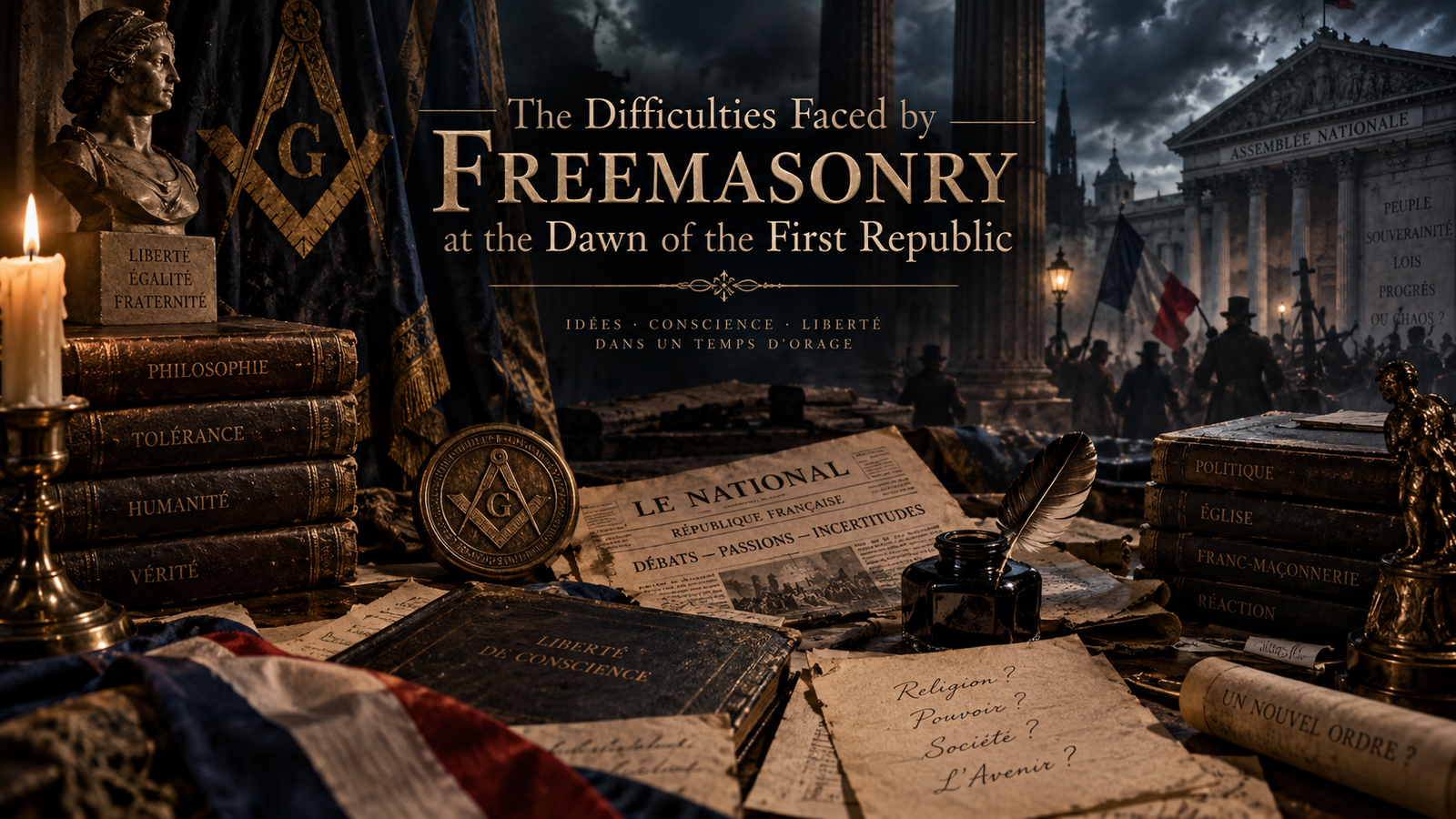
Eduardo Montagut
Without a doubt, the Democratic Sexennium (1868–1874), encompassing the Glorious Revolution, the reign of Amadeo of Savoy, and the First Republic, represents a high point in the history of Spanish Freemasonry. It marked the beginning of a period of greater political and civil freedoms, under whose protection Freemasonry was able to develop as never before. This inaugurated a long period of expansion, despite the continued strength of reactionary and anti-Masonic thought. That growth would eventually be abruptly interrupted by the Civil War and Francoism, when an exceptionally intense persecution of Freemasons was unleashed, with few parallels elsewhere in Europe in terms of the degree of hatred generated.
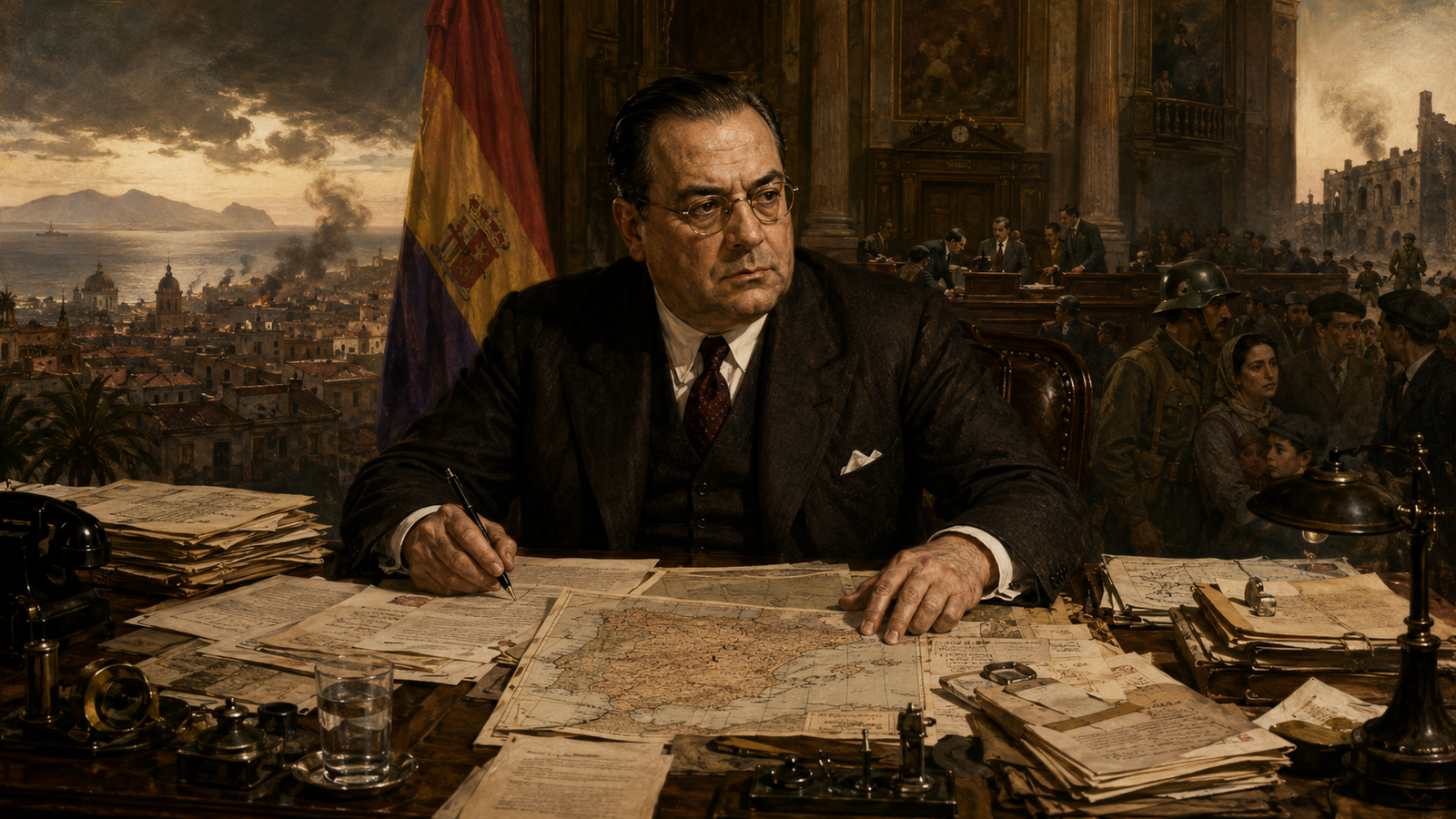
The proclamation of the Republic on 11 February 1873 had a direct impact on Freemasonry, as Ferrer Benimeli reminds us, particularly in relation to the Grand Orient of Spain. First of all, its Grand Master, the politician Manuel Ruiz Zorrilla, went into exile. Yet, more importantly, this political change could hardly leave Spanish Freemasons indifferent, whatever their individual political beliefs. This was a far more significant issue than the departure of the Grand Master, since offices can always be filled by others, or their functions assumed by other officials.
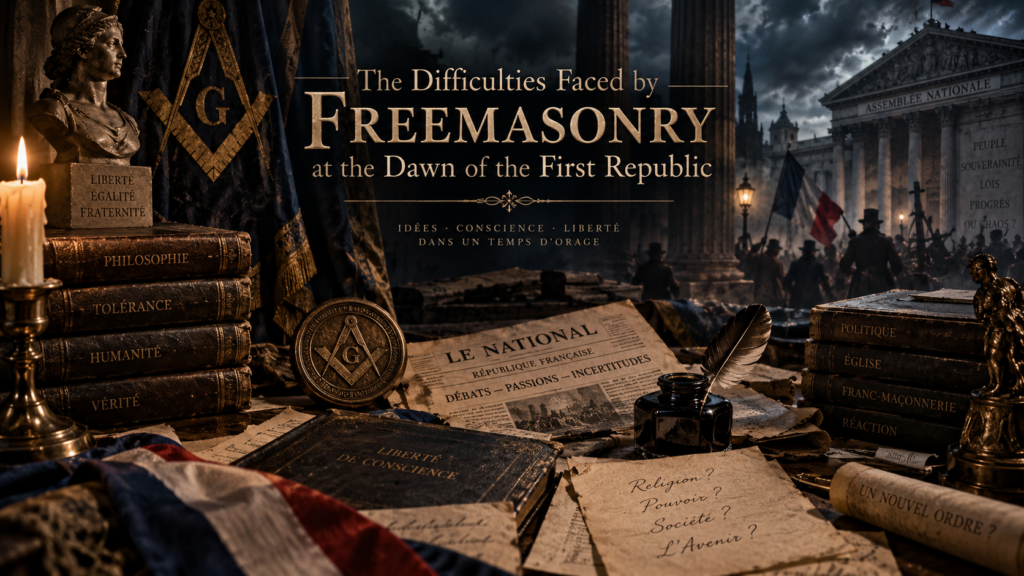
In this context, on 16 February 1873, only a few days after the proclamation of the Republic, the Deputy Grand Master sent a circular to the members of the Obedience in order to address the position that Freemasonry should adopt with regard to politics, an issue which, as the reader will have noticed, is of particular interest to our research.
Precisely on that same day, 16 February 1873, the Deputy Grand Master, who was also at that time Sovereign Lieutenant Grand Commander, issued another circular addressing the problems affecting Freemasonry in Spain and the measures that should be adopted in order to confront and resolve them. It is admittedly difficult to draw a clear dividing line between this circular and the previous one, since politics itself could become a serious internal problem by generating passions and confrontations among Freemasons and therefore threatening some of the fundamental principles of the Order.
However, the circular with which we are concerned here was directed more towards questions arising not from politics, but from the nature and conduct of the individuals who entered and worked within Freemasonry. Some of these problems could therefore be regarded as timeless, although others were more specifically connected to the particular historical circumstances of the period.
According to the Deputy Grand Master, the difficulties affecting Spanish Freemasonry had several causes. The most serious, in his view, was the attempt to accomplish too much in too short a time. In other words, Spanish Freemasons had been impatient, and premature development inevitably led to failure. A kind of feverish activism had taken hold among many Freemasons who were not sufficiently prepared.
As is well known, Freemasonry establishes very clear and carefully structured procedures and stages, allowing neither shortcuts nor excessive haste. Yet the opportunities created by the Glorious Revolution, which made it possible to carry out Masonic work freely, had clearly accelerated the entire process. Perhaps, we might suggest, this was partly an attempt to make up for lost time and possibly to bring Spanish Freemasonry closer to the situation prevailing in other countries.
No specific examples were provided, but we may suppose that this haste was related to rapid and insufficiently rigorous initiations, as we shall later see, or to similar procedures.
As a reaction to this intense activity, a certain apathy had subsequently emerged, interrupted from time to time by bursts of renewed action that were often consumed by internal disputes. We do not know whether the Grand Master was referring specifically to political confrontation or to more strictly Masonic disputes. Once again, therefore, we encounter the difficulty of drawing precise boundaries between these matters, as we have already indicated.
The solution lay in introspection and concentration. There was no point in attempting to “galvanise a fictitious life”. Prudence was therefore required. But how was such prudence to be exercised?
First of all, the lodges were to adopt strict measures aimed at curbing hasty initiations. At that particular moment, it was necessary that “few should be chosen”. This has always been a matter of considerable concern within Freemasonry: namely, the motives and suitability of those who knocked at its doors.
Individuals might seek admission for reasons that ultimately came into conflict with Masonic principles, thereby generating disputes, departures from lodges, and even schisms. Such problems, as we have indicated, recur repeatedly throughout the history of Spanish Freemasonry.
The authorities of the lodges, particularly the Worshipful Masters, were also expected to examine carefully those who already belonged to them, since it had been observed that some members neglected their duties and forgot the obligations they had sworn to fulfil.
The Worshipful Masters were required to be strict in enforcing the obligation of attendance, as prescribed by the statutes, and to apply the penalties established for those who failed to comply with that obligation.
The Deputy Grand Master further stated that he wished to be informed of those brethren who were removed from lodge membership rolls as a consequence of persistent non-attendance, attendance having always been regarded as an important Masonic duty.
He also wished to receive information about the results of the work carried out within the lodges in relation to what he called the “moral improvement of others”. Such improvement was to be achieved through the combined effects of regular attendance, the instruction provided by the Masters, and the awareness gained by individual members of the errors they themselves committed.
The Deputy Grand Master went so far as to describe this process as one of “purification”. Taken out of context, such a term might appear alarming, but it most likely referred not to repression, but rather to the need to refine and strengthen the lodges so that only those Freemasons genuinely committed to the principles of the Craft would remain actively involved.
The time had not yet come to undertake work in the profane world. Internal problems first had to be resolved, not least in order to avoid providing fresh arguments to those in wider society who had long slandered Freemasons.
In conclusion, at a moment of particular intensity in Spanish public life, what was required within Freemasonry was introspection and concentration. This did not mean inactivity, but calm and measured action. The Deputy Grand Master acknowledged that such a task might not appear particularly glorious, but he believed it would prove considerably more effective.
For this article, we have consulted issue no. 45, dated 1 March 1873, of the Boletín Oficial del Gran Oriente de España, as well as José A. Ferrer Benimeli’s Masonería española contemporánea. Vol. 2. Desde 1868 hasta nuestros días, Madrid, Siglo XXI, 1980, pp. 7 ff.